
Open a bank account in Sofia today, and there is a good chance you never have to set foot in a branch. You hold your ID card up to your phone's camera, turn your head left and right for a selfie check, and a few minutes later, the account is ready. A few years ago it meant taking a morning off and queueing at the counter.
That routine now appears in places people don't always expect: freelance marketplaces, crypto apps, car-sharing services, some recruitment platforms and, most strictly of all, online gambling. On a regulated site such as MrBit Bulgaria, for example, players are asked to verify their identity after signing up. For anyone used to clicking "Sign up" and getting straight in, that can feel like an unnecessary hurdle.
There is usually a solid reason behind it, and often a legal one. Here's what actually happens after you point the camera at your ID, and when you should think twice before sending your documents anywhere.
Three reasons platforms want to know who you are
The first reason is the law. In the EU, banks, payment providers and gambling operators fall under anti-money laundering rules. Directive 2015/849, the fourth Anti-Money Laundering Directive, extended these obligations to all providers of gambling services rather than just physical casinos, and requires them to check a customer's identity when stakes or winnings reach €2,000 or more. A new EU regulation adopted in 2024 goes further still, with most of its rules applying from July 2027.
The second reason is age. Some services are for adults only, and gambling is the obvious example. Anyone can type 1990 into a date-of-birth field. Faking an ID card and a live selfie that actually match is a lot harder.
The third reason is trust between users. On marketplaces and freelance platforms, verification makes it much harder for one person to open ten fake accounts, write their own reviews, or vanish after taking a payment. If you have ever bought something second-hand online, you know how much a verified badge on the seller's profile is worth.
How the check works in practice
The details differ from one platform to another, but most verification flows combine some of the same steps:
- Document capture: you photograph your ID card or passport, and software reads the data and checks the security features of the document.
- Liveness check: a short video or selfie confirms that a real person is in front of the camera and that the face matches the photo on the document.
- Additional proof: financial services in particular may ask for a utility bill or bank statement to confirm your address.
Many platforms use specialised verification providers for this, so the service you signed up with often receives only the outcome of the check rather than handling every step itself. Under GDPR, whoever stores your documents must also be clear about why they keep them and for how long.
Verification works both ways for job seekers
Recruitment is moving in the same direction. Employers want to know that candidates are who they say they are, and candidates have even more reason to check employers. Fake job offers that ask for an ID scan "for onboarding" before any real interview are a well-known trick, and nPloy's guide to avoiding remote work scams covers the warning signs worth knowing before you share anything personal.
One rule of thumb: a genuine employer has no reason to ask for your ID before you have had at least one proper conversation, and certainly not through a private messaging app.
Why some platforms reward you for verifying
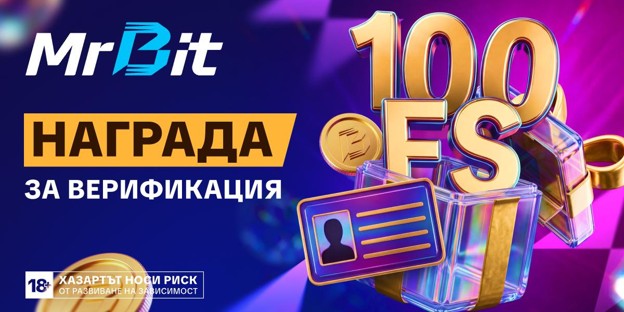
Verification is an extra step, and every extra step makes some users give up halfway. So platforms sweeten it. Marketplaces give verified sellers a badge that helps them sell, and some gambling operators add a bonus. MrBit, for instance, has a promotion called „Награда за верификация“, which translates as "verification reward", for players who complete the check.
The bonus is a nice extra, but the check itself is there for a specific reason: confirming that the player is an adult and that the account really belongs to them. Gambling is strictly for people over 18, and linking an account to a real person is also what makes tools such as self-exclusion work.
What to check before you upload your ID
Scammers know people are used to these requests by now, which is exactly why they copy them. Before you send anything:
- Make sure you are on the official website or in the official app, not on a page you reached through a link in a message.
- Look for clear company details, a licence where the activity requires one, and a privacy policy that explains how your documents are stored.
- Never send scans of your ID by email or chat to a person you don't know.
- If you share a copy outside a verification flow, consider adding a note on it such as "for verification with [company name] only".
Three minutes of hassle, and worth it
Nobody enjoys photographing their ID card at the kitchen table. But if platforms skipped it, opening an account in someone else's name would take seconds, and you might be the one sorting out the mess with your bank.
So verify, just not everywhere. If a platform can tell you why it needs your ID and how long it keeps it, go ahead. If it can't, keep your documents to yourself.
18+. Please gamble responsibly.


